
Virtual Tours for Luxury Homes:
Creating a Controlled Digital Experience
Selling a luxury home is different from marketing a typical residential property.
At the upper end of the market, the objective isn't necessarily to give everyone immediate access to every detail of the property. Sellers may value privacy and exclusivity, while selling agents often carefully manage how a prospective buyer is introduced to and experiences the home.
That doesn't make a virtual tour less useful.
It changes when and how the virtual tour should be used.
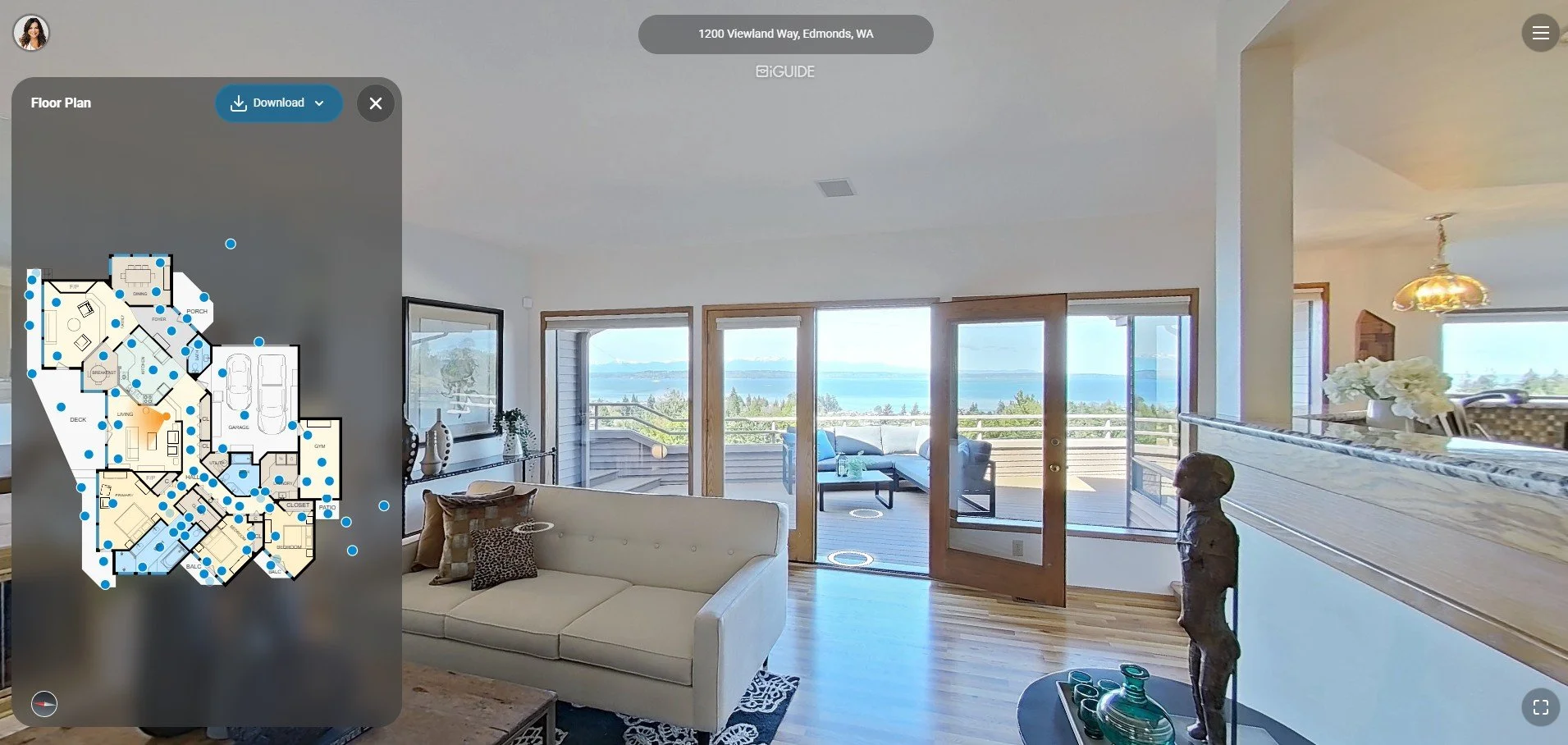
The Agent Is the Start of the Process
For a distinctive luxury property, the selling agent may want a prospective buyer's first complete experience of the home to happen in person.
There is an emotional component to purchasing a home that photographs, video, and virtual tours cannot completely reproduce. The sequence in which a buyer enters the property, encounters important spaces, sees a view for the first time, and hears the story behind particular features can all be part of the experience the selling agent wants to create.
A virtual tour doesn't need to interfere with that.
The agent controls when it becomes part of the process.
For some buyers—particularly those considering a property from another city or country—the agent may decide that controlled virtual access is appropriate before an in-person visit.
For others, the agent may deliberately wait until after the showing. The prospective buyer experiences the home as the selling agent intended and has an opportunity to develop a personal and emotional connection with the property.
The virtual tour then becomes a follow-up tool, allowing the buyer to return to the property virtually while considering their decision.
Instead of replacing the showing, the virtual tour extends it.
The Property Website Becomes the Front Door
A distinctive luxury property deserves more than a standard listing page.
A dedicated property website can bring together professional photography, video, the story of the property, architectural details, amenities, location information, and other material selected specifically for that home.
The public portion of the website introduces the property and generates interest, while the detailed interactive experience can remain protected.
Rather than distributing a generic password, an individual account can be created for each qualified prospective buyer. Each buyer receives their own username and password for the protected portion of the property website.
This allows access to be enabled or disabled individually without affecting other prospective buyers and avoids having a single password circulate among multiple people.
The result is a more exclusive virtual experience appropriate for a high-value property.
Give Qualified Buyers the Opportunity to Revisit
After an in-person showing, buyers rarely remember everything they saw.
A large or complex property may have numerous rooms, architectural details, amenities, systems, outdoor spaces, and other features. Even an extensive showing provides a limited amount of time to absorb all of that information.
An interactive virtual tour gives the buyer an opportunity to explore the property again without requiring another immediate appointment.
They can revisit the kitchen, reconsider how rooms connect, look again at the primary suite, examine outdoor areas, or simply move through the house again at their own pace.
This can be particularly useful during the period when a serious buyer is deciding whether the property is right for them.
The virtual tour is no longer simply a tool for attracting attention.
It becomes a tool that can help a qualified buyer make a purchasing decision.
Use Tags to Reinforce the Selling Points
Interactive tags can also remind buyers of important features discussed during the showing.
We use this approach in our interactive tour of a beach house vacation rental, where tags provide additional information as the viewer encounters features throughout the property.
For a luxury residence, tags could highlight custom finishes, premium appliances, architectural details, smart-home systems, wine storage, waterfront features, significant renovations, or other elements that distinguish the home.
Instead of expecting buyers to remember every detail from the showing, the tour can reinforce key selling points while they are looking at the relevant feature.
Marketing a Distinctive Property?
Ilios Remote Sensing creates interactive virtual tours that can be incorporated into the marketing strategy for luxury properties.
The tour can provide controlled access for qualified prospects, allow serious buyers to revisit a property after a showing, and reinforce the features that distinguish the home.